
Distilled · 16 Near Media episodes
Google reviews for your restaurant:
few, steady and answered.
Sixteen episodes, seven hours of conversation between local search specialists. Here is what they say about reviews, ordered for a restaurant. Every claim links to its minute in the original video.
Updated October 1, 2026
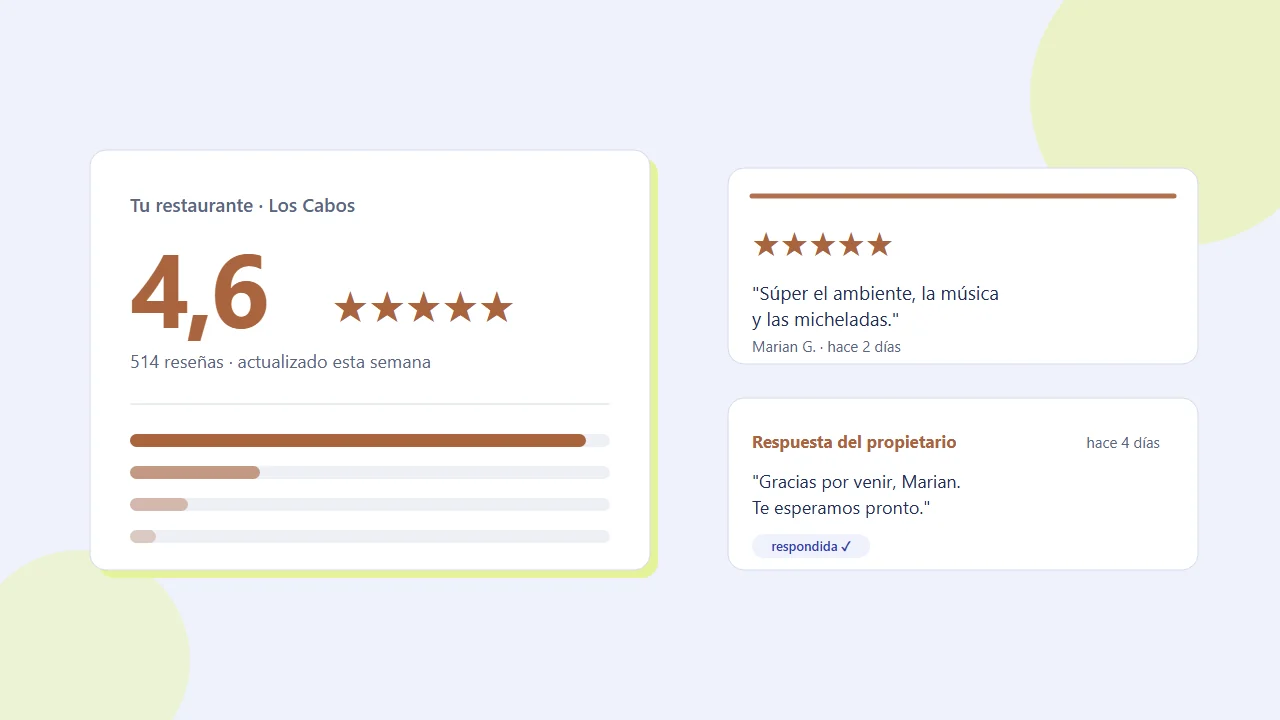
In short
- Google looks at how recent your reviews are. One burst every three months lifts you and then fades; a few every week hold you up.
- Almost nobody picks a business with no reviews, and few people read them. The rating, the date and the photos do most of the work.
- Give a heads-up that you will ask, ask in person, and give a hint about what to write.
- Answer every review, starting with the bad ones.
The date of your last review matters more than the total
Darren Shaw coordinates the annual local ranking factors survey. In the 2026 edition he says it used to look like a numbers game: a good rating and more reviews than the neighbors. Now the specialists see that when the last one arrived is what counts.1
His example is brands that email their whole list every quarter. They get a burst, jump to the top, and then coast until the next one. His recommendation is to ask continuously. If a business has 2,000 reviews and none in six months, Google can read that as a sign something is wrong there.1
In another episode they say it shorter: if a business has gone three months without reviews, Google concludes nobody goes there anymore.2 That is the speaker's opinion, not a published Google rule.
Reviews get you on the list. After that, few people read them
In a Near Media study, only 9% of clicks went to profiles with no reviews or rating. They describe it as a filter: with no reviews you are not on the list of options.3 Once inside, only 20 to 35% of people read what they say, and the number rises when the decision is expensive.4
In restaurants people start with the best-rated places, and photos and how the place looks weigh a lot.5 Among those who do read, many sort by worst reviews to see what can go wrong, even when the average is 4.7.3
Our reading: what someone sees in five seconds is your rating, the date of your last review, your photos and whether the worst review has an answer. That is what to protect first.
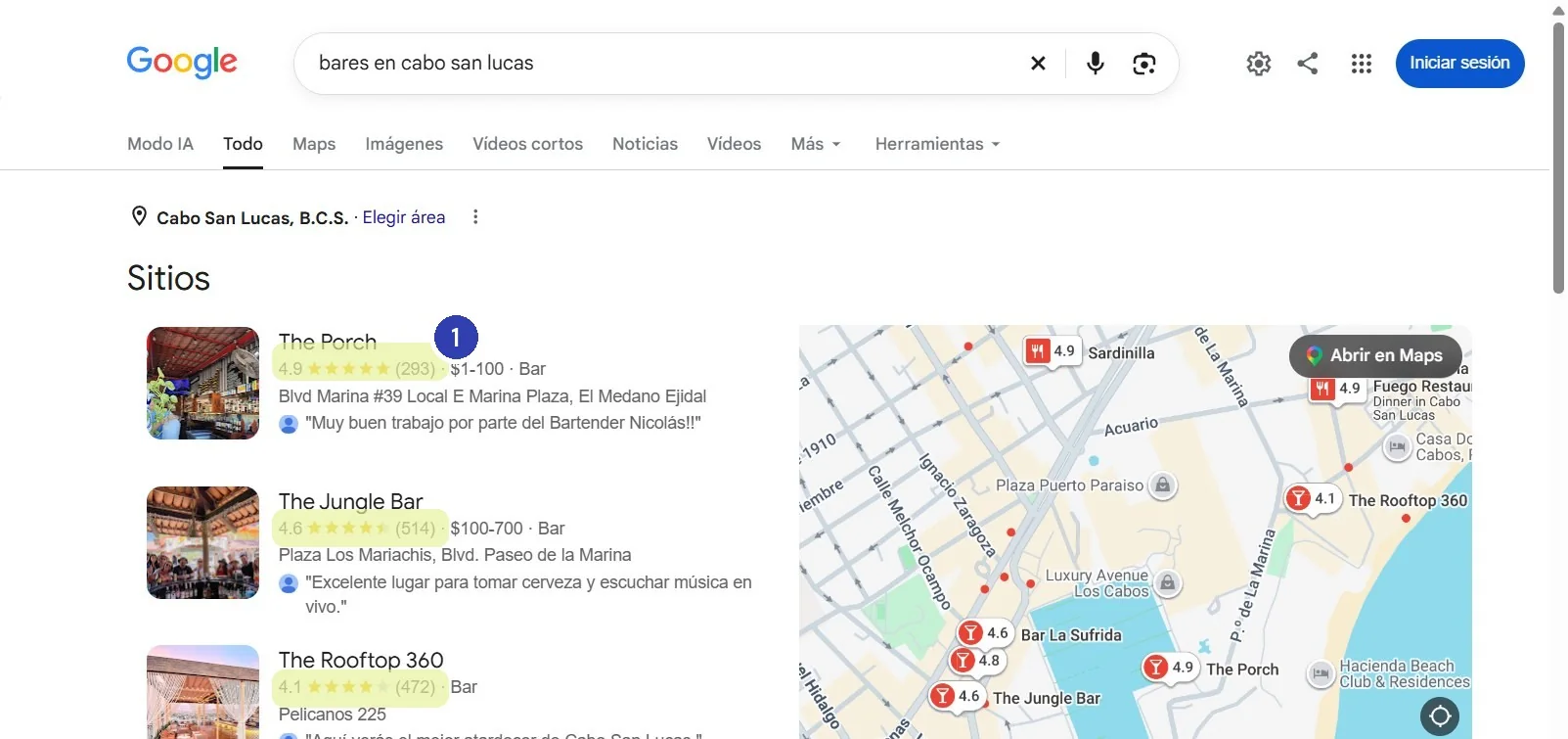
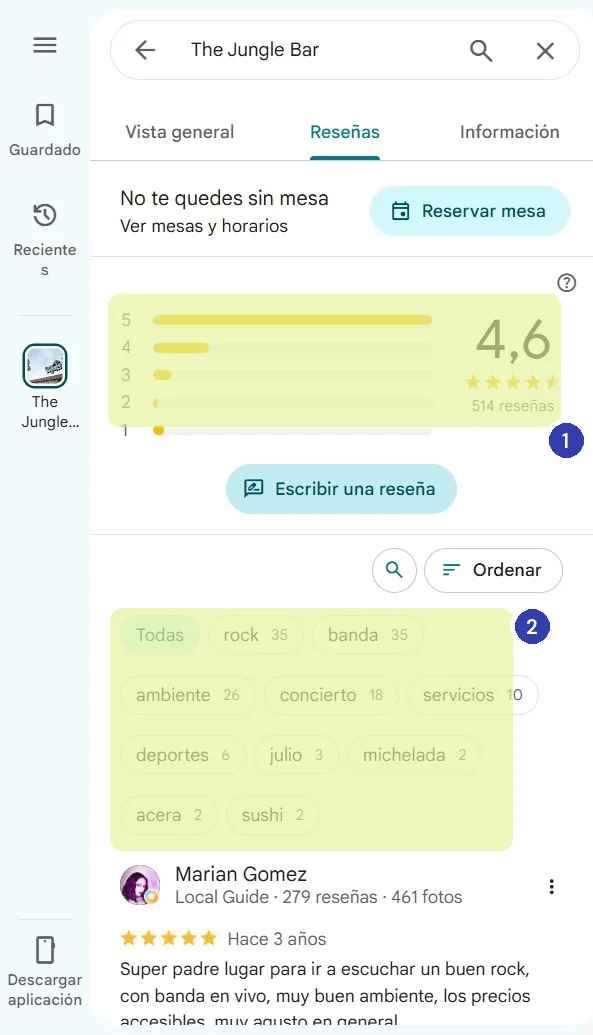
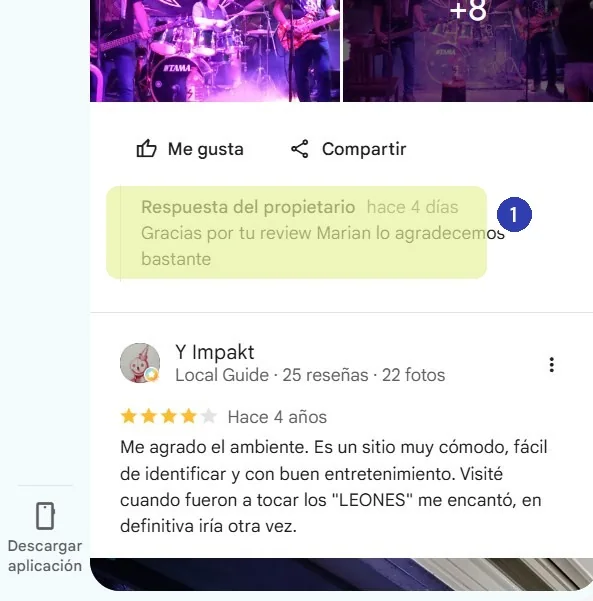
What it looks like, in captures
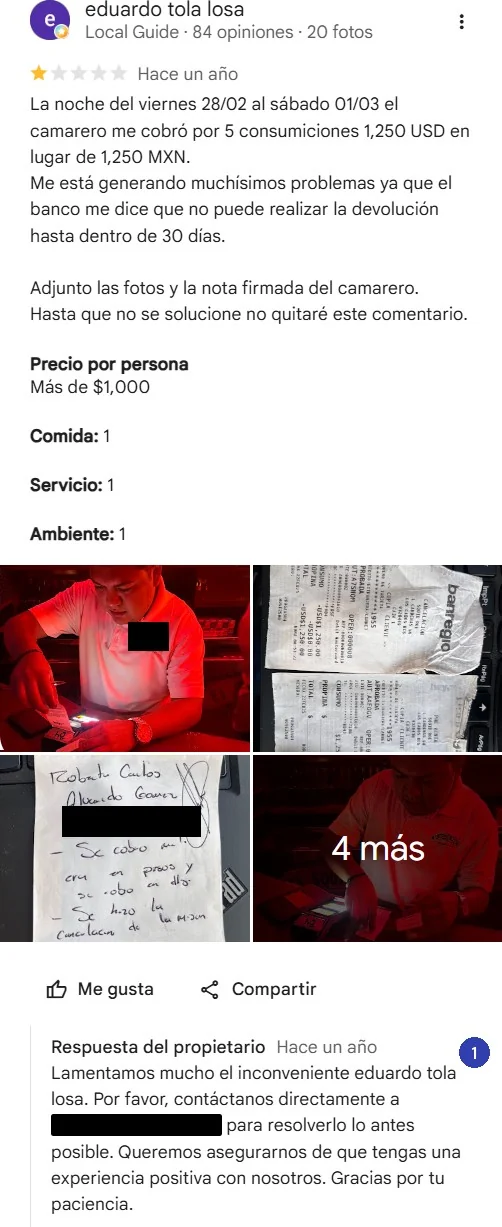
Google captures from a search in Cabo San Lucas, October 2026.
How to ask
Warn first, remind later
The method they repeat most is simple. Early on you tell the customer you will ask for a review at the end, and you wait for their yes. Then you send a reminder. That commitment lifts response, though it never reaches everyone.7 When consumers were asked how they prefer the reminder, the answer was email.8
They also give a sense of what to expect. In categories nobody brags about, like home insurance, about 1 to 1.5% respond to a single email. In restaurants, when you ask, they estimate it can reach 15 or even 20%.7 That is an estimate said in conversation; yours has to be measured.
Pick the moment and test it
A study with an online clothing store found that asking too soon cut review volume in half or worse, and that waiting between nine days and two weeks increased it. Near Media's conclusion: it depends on the category. Measure how many reviews arrive on their own and test different moments.6
Our reading for a restaurant: the experience ends with the check, so that is the natural moment. Compare it over two weeks against a next-day message and keep whichever gives you more.
Give a hint about what to write
Many people want to leave something and do not know what to say. A concrete prompt unlocks it: the episode's example asks the customer how their oil change went.9 Reviews with detail also tell Google what you sell.3
For your team
When you drop the check: “Everything good with dinner? If you have a minute, a Google review helps us a lot. Search for us by name and tell people what you ordered.”
Next-day message, only if the customer gave you their number and their permission: “Thanks for coming in yesterday. If anything was off, reply here and I will fix it. If you liked it, a Google review helps us: search for us by name and say what you ordered.”
Do not pick who you ask
Google forbids asking only happy customers and offering anything in exchange (the rules are linked at the end). What you can do is open a private channel for complaints. At GatherUp, a reviews platform, they redesigned their flow when Google changed its terms in 2018: first a private comment, and then the option to publish, for everyone. What they saw was that the happy ones posted, and the upset ones, already vented in private, did not.10
How many reviews would you be due?
Move the numbers. The last one you do not know yet: measure it for two weeks.
23 reviews a week · 97 a month
You are current: your last review is less than a month old.
The starting value of the third box comes from Near Media's estimate for restaurants that ask.7 The three-month warning comes from the opinion cited above.2
Where they disagree: Google's direct link
Google gives every business a link to ask for reviews. In January 2026, a Near Media participant said he never recommends it: he estimates a review that arrives through that link is 80% more likely to be filtered. His alternative is to ask the customer to search the business by name and leave the review from there. Another participant answered that the link is Google's own.11
Neither presented data; it is a hypothesis from people who see many profiles. Asking people to search by name costs nothing, so you can test it.
Answer every one
The figures cited in Near Media: 89% of consumers say they would use a business that answers every kind of comment, against 42 to 44% if it answers none. Their explanation is that the answer works as a sample of the service. Many complaints are precisely that nobody answered, so seeing the owner answer already says something.12
Since a good share of the people who read go straight to the worst, start there: a short answer, what you fixed, and how to reach you.
Google is not the only place
Google Maps AI answers already use reviews from other sites.13 When you trace where those assistant recommendations come from, directories like TripAdvisor and Yelp show up.14 In a study of restaurants in Ireland both appeared in the first results, and all the attention went to TripAdvisor.15
The episode's suggestion is a reminder at the counter listing the places where people can leave an opinion, and checking which site a recommendation comes from when a competitor shows up ahead of you.14 Our reading for Los Cabos: if most of your customers are visitors, take care of your TripAdvisor listing as much as your Google one.
Brad Wetherall, former head of operations for Google Business Profile support, recommends uploading new photos every two weeks instead of a hundred at once.13 And before any tactic comes the basics: in Near Media they remind you most businesses have not even claimed their profile.16
Read what they write about you and your competition
The last episode on the list treats reviews as a focus group that never ends. The idea is to read yours and your competitors' looking for the language people use and what moves or upsets them. If you are better than the place across the street at something, check whether your customers mention it. If they do not, that is what to ask them to write about.4
Your list for this week
0 of 9
Frequently asked questions
How often should I get Google reviews?
Continuously. Darren Shaw, who coordinates the annual local ranking factors survey, recommends asking all the time instead of collecting one burst per quarter, because Google takes into account how recent they are.
Can I ask only the happy customers?
No. Google forbids asking selectively and offering anything in exchange. Ask everyone, and open a private channel for complaints.
Does answering reviews help?
Yes. According to the figures cited in Near Media, 89% of consumers say they would use a business that answers every kind of comment, against 42 to 44% if it answers none.
Sources
Our own synthesis by AventarIA from these conversations. The ideas and figures belong to the people who say them in each episode; every link opens the video at the minute cited. Where it says “our reading”, the conclusion is ours.
- Near Media: Darren Shaw Breaks Down the 2026 Ranking Factors 7 nov 2025 · min 14:08
- Near Media: Google Ask Maps Deep Dive: The Future of Local SEO & AI Search 30 abr 2026 · min 28:05
- Near Media: Consumers indicate that reviews are important but do they read them? 11 ago 2023 · min 4:36
- Near Media: The Continuous Focus Group: Mining Competitor Reviews with AI 2 jul 2026 · min 4:31
- Near Media: How Often Do Searchers Use the Local Finder? 8 mar 2024 · min 10:53
- Near Media: When should you ask for reviews? 9 jun 2023 · min 3:28
- Near Media: From Stars to Skepticism: How Reviews Evolved & Why Trust Is Declining 10 abr 2025 · min 23:53
- Near Media: The Impact of Local Business Reviews on Consumer Behavior 18 nov 2022 · min 8:28
- Near Media: Consumer review trust down but usage of reviews is up in the past 2 years. Why? 3 abr 2022 · min 4:25
- Near Media: Reviews are Like Death & Taxes & Should be Treated that Way 15 abr 2024 · min 6:06
- Near Media: Inside Google Local Rankings and the Review Purge 20 ene 2026 · min 13:51
- Near Media: The Future of Reviews: What Businesses Need to Know 18 abr 2025 · min 1:29
- Near Media: Navigating Google Reviews, part 2: interview with Brad Wetherall 16 ene 2025 · min 34:13
- Near Media: Brands, Imagery, Reviews & Intent Pages: What Actually Drives Multi-Location SEO Now (Part 2) 2 abr 2026 · min 23:52
- Near Media: BrightLocal Study: Which Directories Matter for Local? 20 oct 2024 · min 8:22
- Near Media: Google Maps' AI Shift: Why Brand Building, Reviews & Social Presence Are the New Local SEO 18 jun 2026 · min 37:44
Google rules: Tips for getting more reviews and Prohibited and restricted content.
Check it with your own numbers.
Send us this month's receipts and your sales report on WhatsApp. In 7 days we tell you, in pesos, how much you are overpaying. If we find nothing, you pay nothing.
Ask for the free diagnosticSee pricing